PUBLISHED ON — February 2026
Jackpot Widget
Overview
Alea is a B2B technology company in the iGaming industry that provides a casino game aggregation platform for online casino operators. It offers a single API integration connecting operators to thousands of games from many providers, simplifying deployment and expanding game portfolios. This helps casinos access, manage, and optimise a large library of gaming content and related tools through one service.
Role
Date
Challenge Overview
Designing a Revenue-Critical Jackpot System from Scratch
The main challenge of this project was designing a complex and financially sensitive feature without having clear references or a solid understanding of the end user’s real expectations.
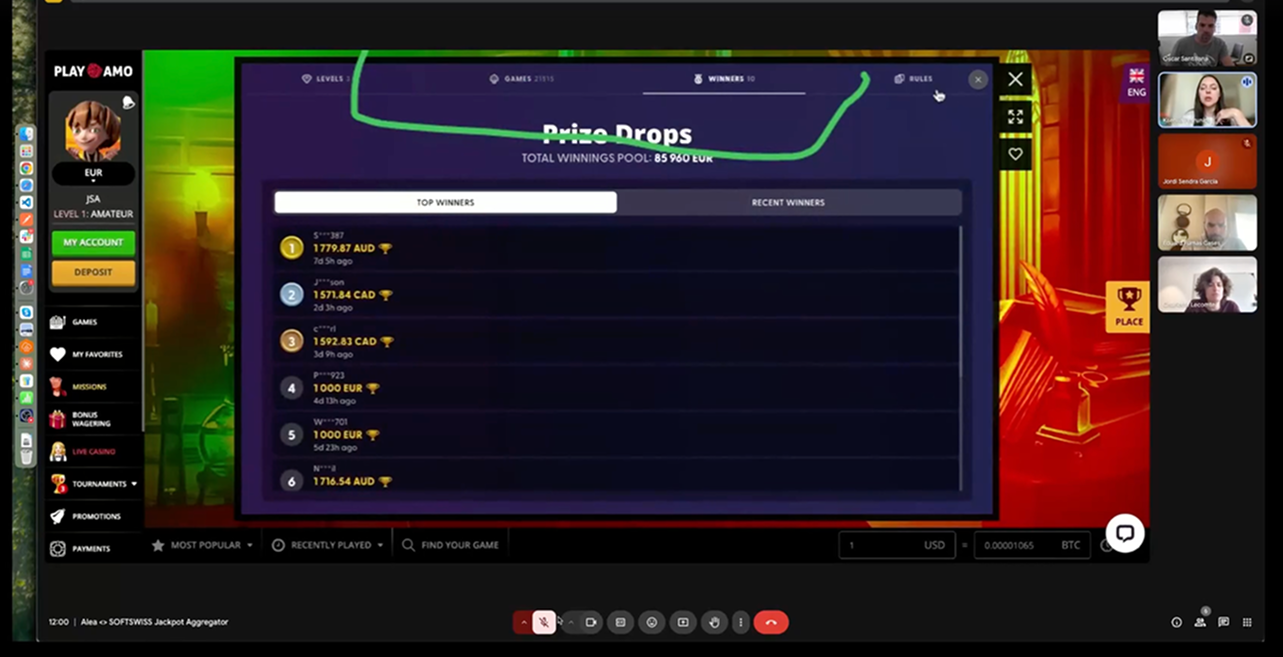
From the beginning, the lack of strong market benchmarks made it difficult to identify patterns, best practices, or industry standards for structuring, communicating, and managing a jackpot system (seed, reseed, impact on GGR/NGR, bet contributions, payouts, etc.). Although we contacted casinos that had implemented similar functionalities, the information gathered was partial and not strongly focused on user experience.
This forced the team to operate in a context of high uncertainty, where it was first necessary to understand and structure the conceptual model of the product (how the jackpot grows, how it impacts revenue, how it resets, who assumes the cost, how it is paid out) before even thinking about the interface or experience.
Interview with Softswiss Casino
First kick off with clear goals
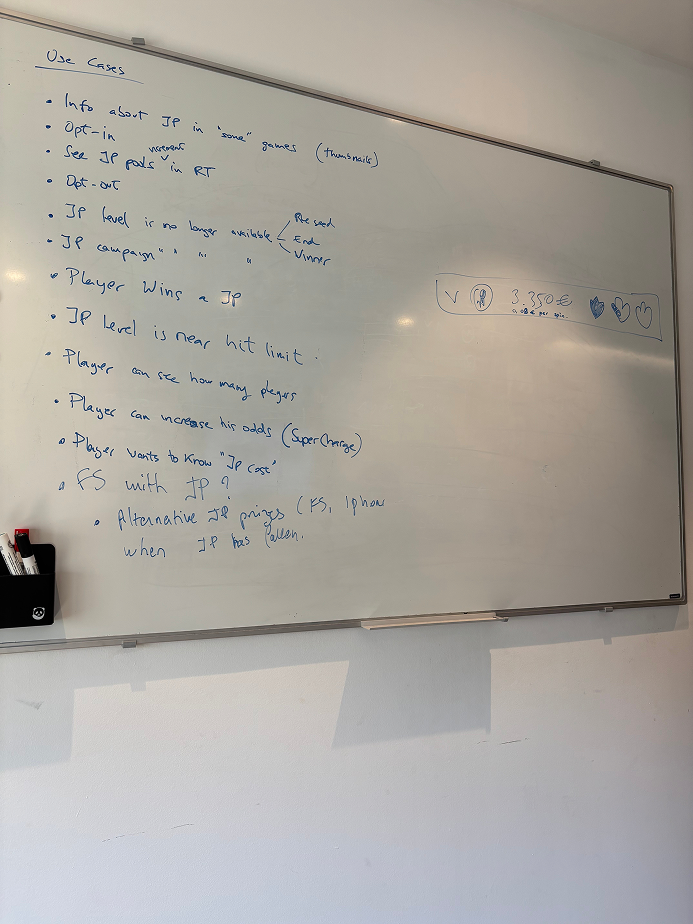
Discovery & Problem Framing
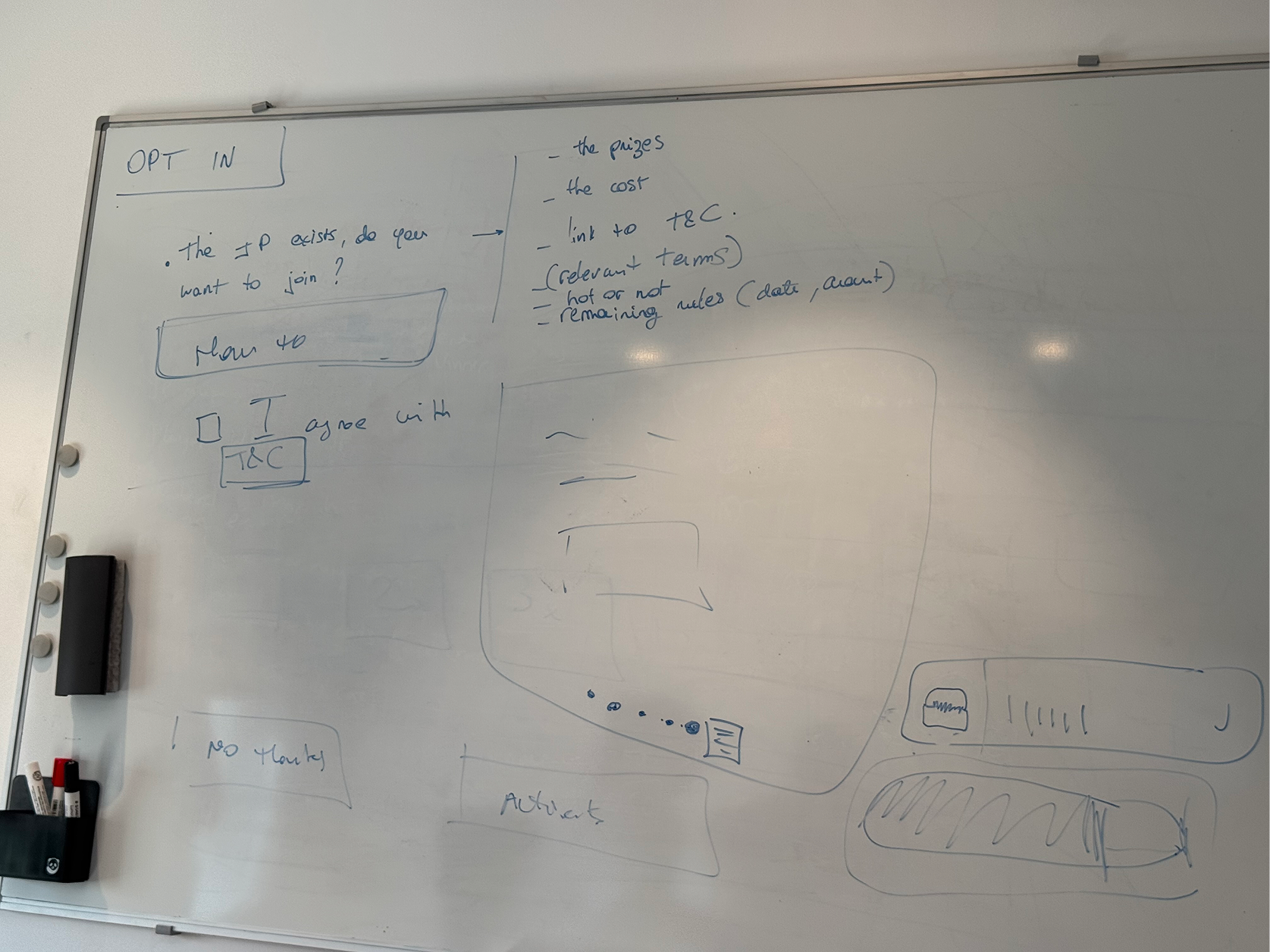
Strategic Workshops & Alignment
We conducted several focused workshops with 2 Product Managers, 1 Product Designer, and the Product Lead.
Since the Product Lead held the deepest knowledge of the jackpot mechanics, she led the sessions and defined the core logic, constraints, and business priorities.
The goal was to align on scope, clarify operational flows, and reduce ambiguity before moving into solution design
Concept Exploration & Interaction Iteration
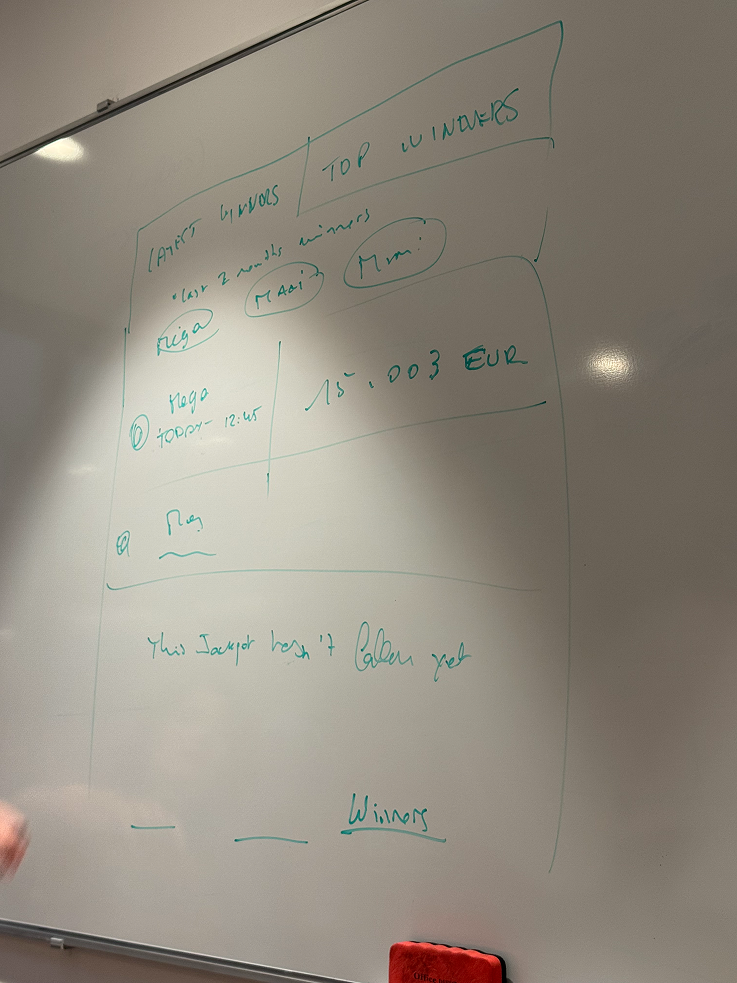
Once the foundations were clear, we explored different ways to present the jackpot widget within the dashboard.
Through live, collaborative sessions (both in-person and remote), we iterated on structure, hierarchy, and data visibility directly on the product interface.
This allowed us to validate ideas quickly and refine the solution in context rather than in isolation.
Result
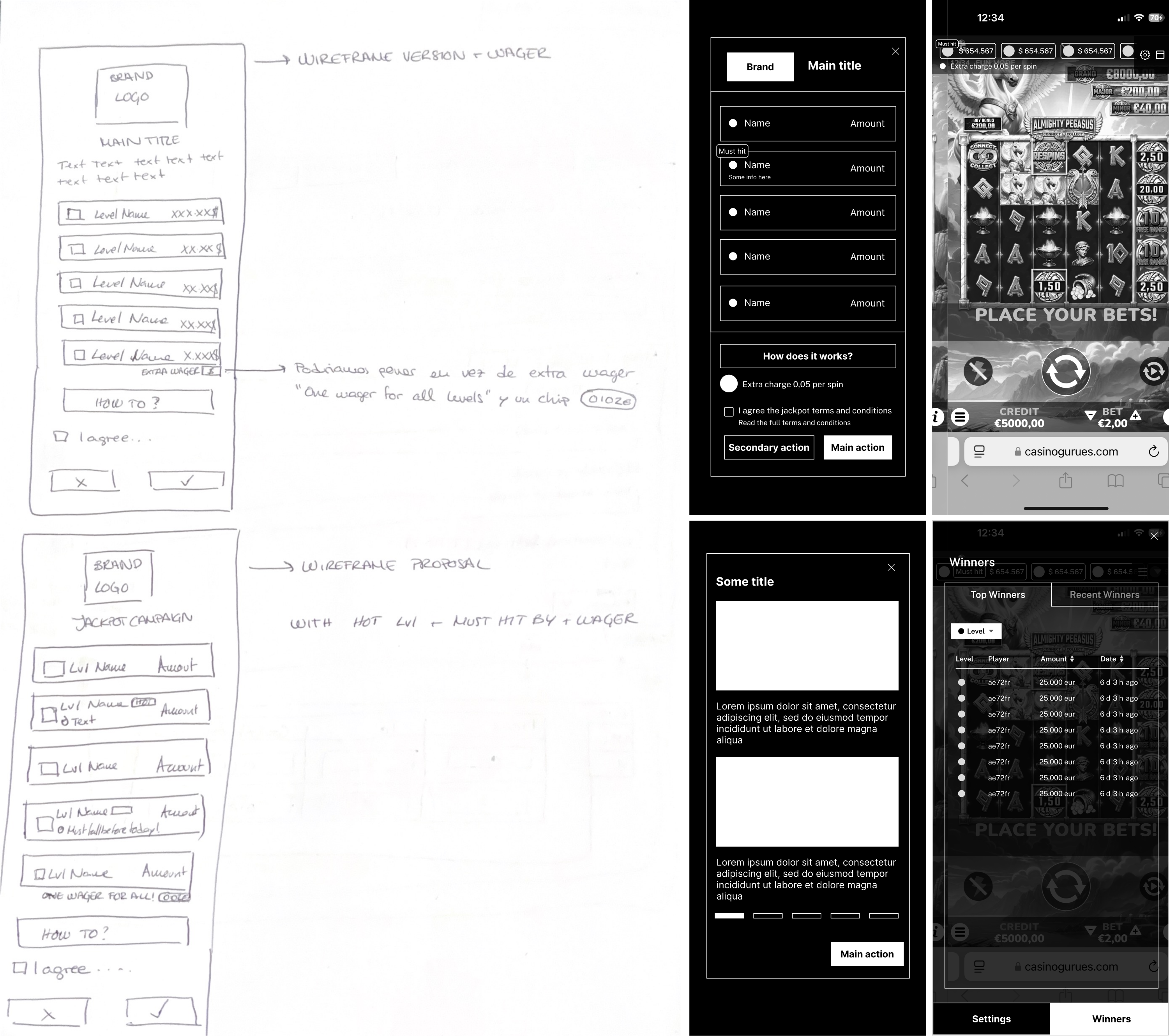
Sketches & Wireframes - Rapid Iteration & Structural Validation
We held bi-weekly sessions to iterate on early sketches and wireframes, focusing on structure, interaction clarity, and dashboard integration.
Three validation sessions allowed us to refine the concept before moving into high-fidelity design.
Key refinements during this phase included:
-
Expanding the clickable area to improve usability and reduce friction.
-
Repositioning the opt-out as the final action to avoid accidental exits.
-
Simplifying dock and hide behaviors to create a more consistent experience across portrait and landscape orientations.
This phase helped us stabilize the interaction model and reduce complexity before visual detailing.
High-Fidelity Mockups - Visual Clarity & Final Approval
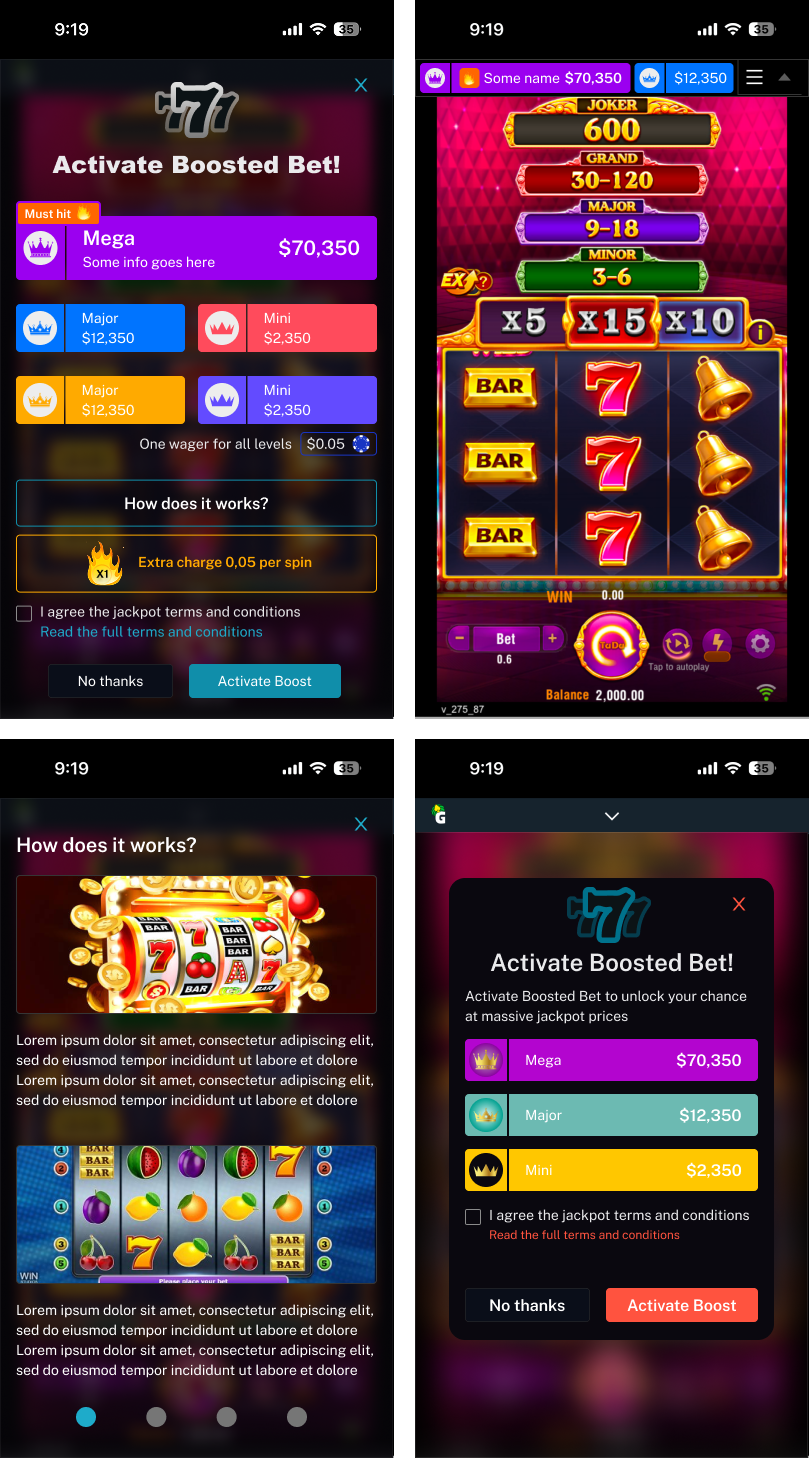
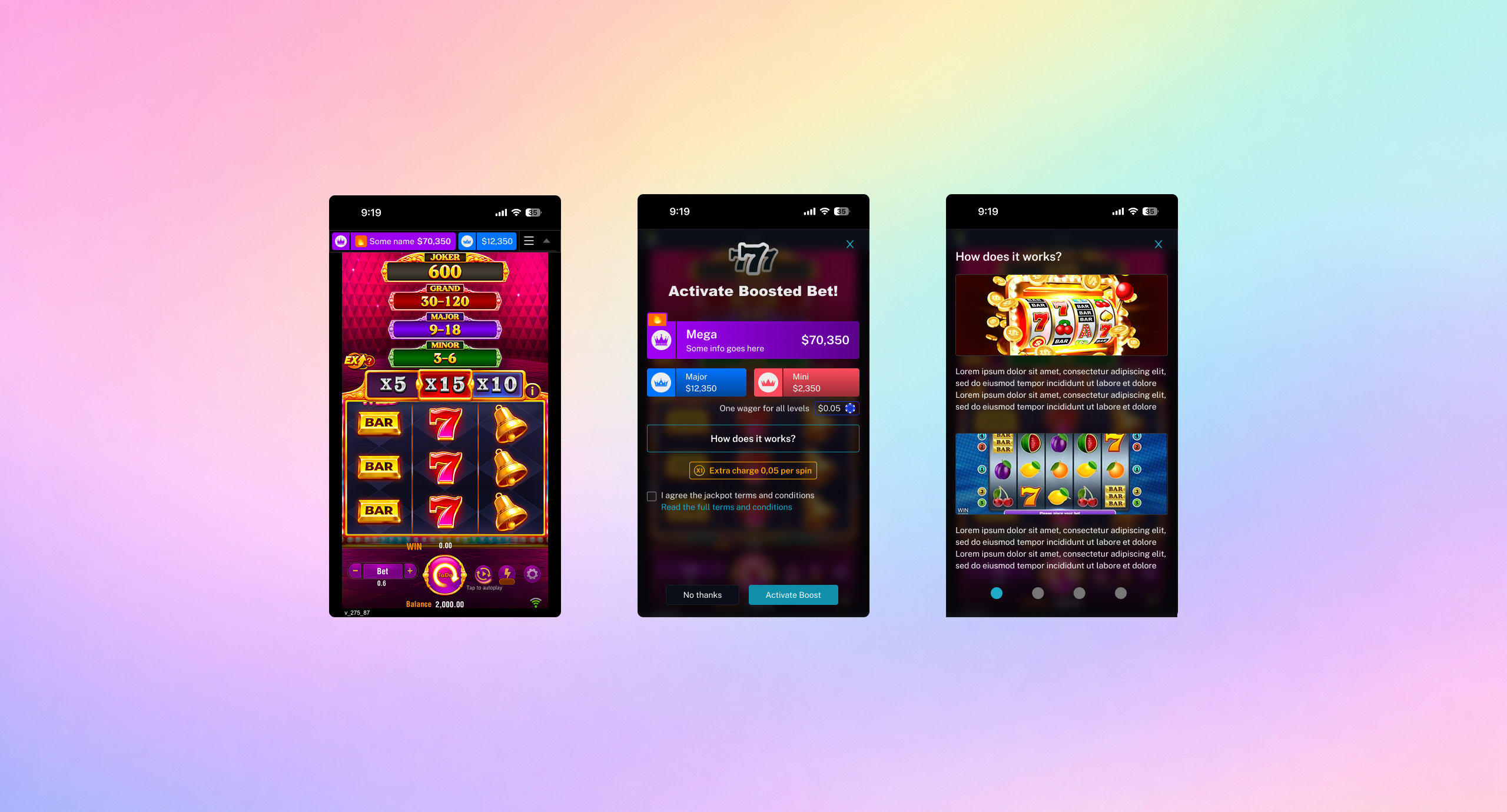
The mockup phase focused on visual hierarchy, campaign clarity, and jackpot level emphasis (including the “one wager for all levels” concept).
Two final validation sessions led to design approval.
The last refinements were driven by stakeholder feedback, ensuring:
-
Clear differentiation between levels.
-
Improved visibility of wager requirements.
-
Stronger hierarchy between campaign branding and jackpot data.
-
Cleaner interaction cues for accessibility and responsiveness.
The final outcome was a validated, production-ready widget balancing financial transparency, usability, and business goals.